
What Would Happen If Humans Disappeared Tomorrow? A Scientific Timeline of Earth Without Us
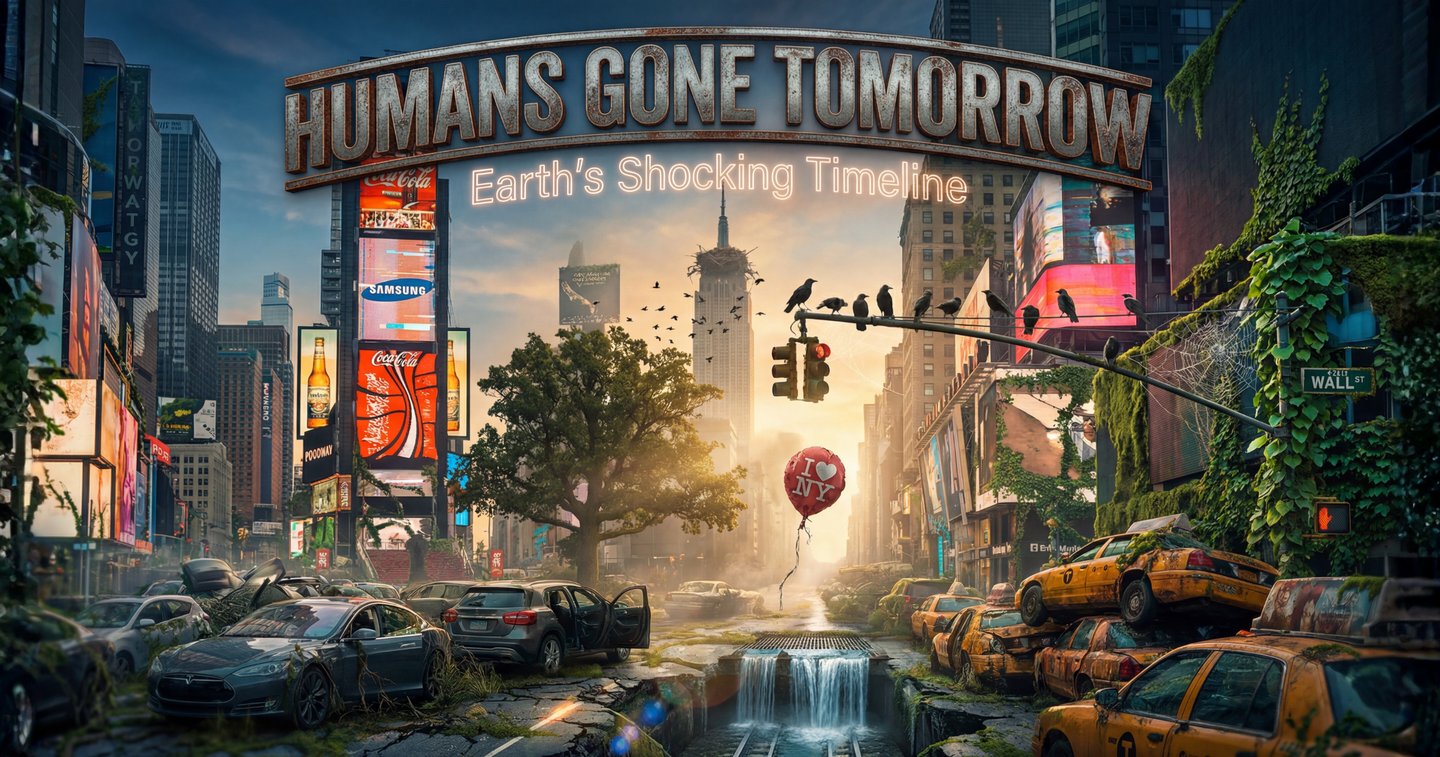
How Earth transforms when humanity is gone - explained through real science, not fiction.. BoooM...


Imagine a world where every human vanishes overnight.. no warnings, just a silent Earth left to itself. It sounds like science fiction, but scientists have actually studied this scenario to understand just how deeply we shape our planet and what would happen if we were suddenly gone !!!..
In this article, we’ll explore what would happen minute by minute, year by year, and millennia into the future based on scientific research and expert predictions.
Immediate Aftermath (Hours to Days)


The moment humans disappear, the systems we depend on and those that depend on us - begin to break down..
Power grids everywhere would immediately fail. Without operators, power plants and electrical systems stop working, and cities go dark.
In colder regions, water pipes would freeze and burst as heating systems shut off.
Infrastructure Shutdowns
Urban Flooding Begins
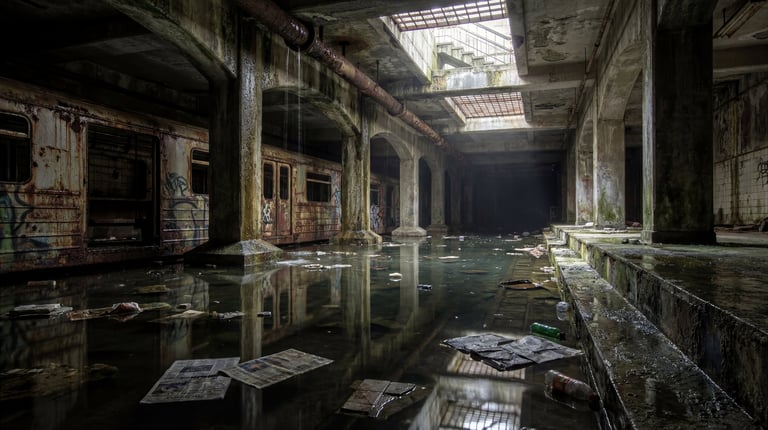
Subways and underground systems that rely on pumps to keep water out would start filling, turning tunnels into rivers within days.
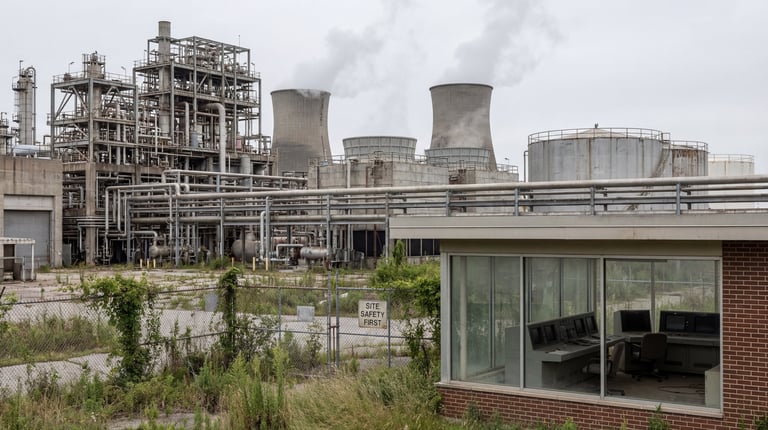
Industrial Sites Enter Safe Shutdown
Contrary to dramatic apocalypse ideas, many industrial systems - refineries, reactors and chemical plants are designed with automatic safety shutdowns. This means they won’t explode globally, though some older facilities might have localized hazards.
Months After Humans (1–5 Years)
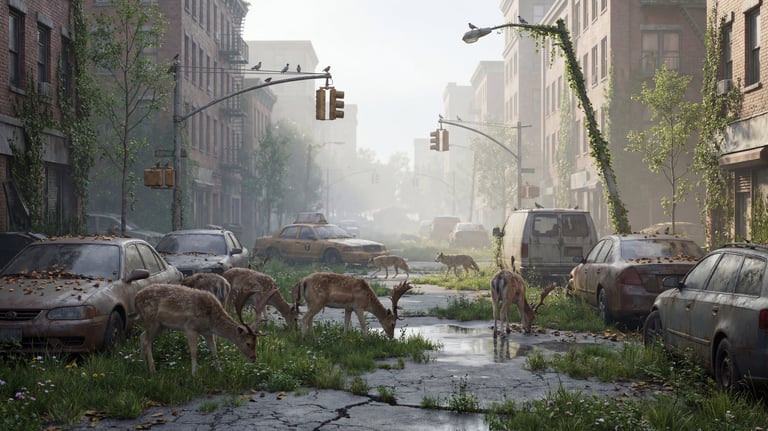
Vegetation sprouts through cracks in asphalt and concrete. Hardy weeds and pioneer plants quickly colonize streets, sidewalks, and abandoned lots.
Nature Begins to Reclaim Cities
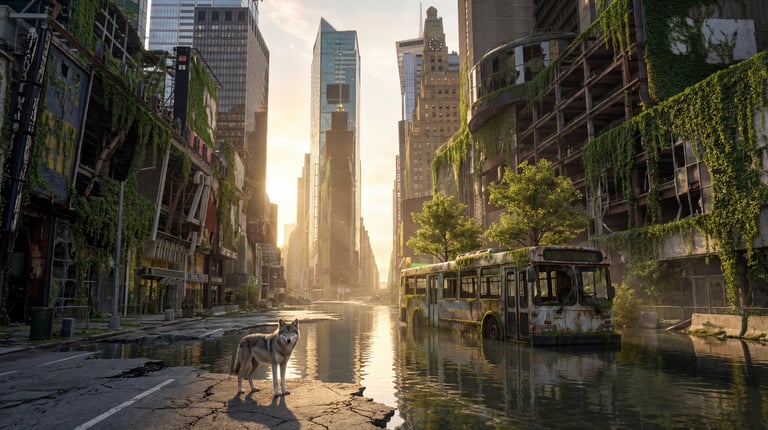
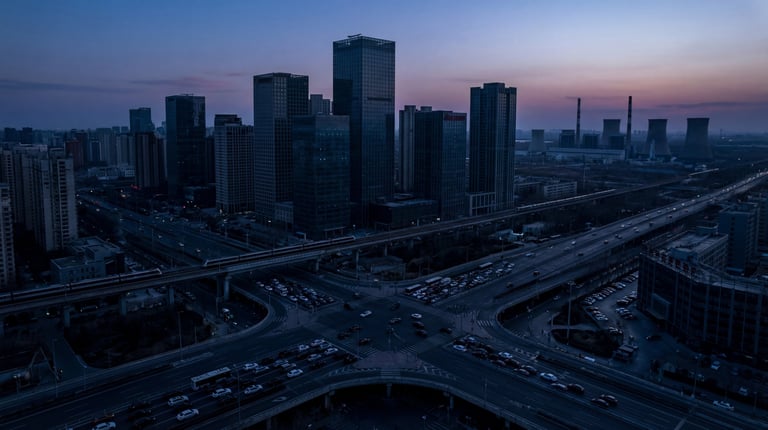
Buildings lose upkeep:
Wooden houses rot and collapse.
Metal rusts and weakens.
Glass breaks and falls out of skyscrapers.
Wildlife Returns
Animals suppressed by human presence - deer, coyotes, birds - begin exploring urban landscapes with quiet streets and abundant new habitats, biodiversity in former suburbs and cities increases.
Decades Later (20–100 Years)
Over 50–100 years, most suburbs and cities are overgrown with grasslands shrubs and even forests. Roads crumble under expanding plant roots.
Forests Spread
Climate and Water Quality Improve
With no emissions from vehicles or factories, air and water quality improves globally. Rivers and lakes become clearer and marine ecosystems start to recover from pollution and overfishing.
🐾 Domesticated Animals Struggle
Animals bred for farming - cows, pigs, chickens - often fail without human care. Some may escape and adapt, but many likely decline due to predation, disease and competition.
Centuries to Millennia (Hundreds to Thousands of Years)
After a few hundred years:
Steel bridges collapse as reinforcement rusts.
Concrete structures crumble from water and plant growth.
Only the most durable structures - massive stone buildings, monuments - stand longer, but even they slowly erode.
Cities Cease to Be Recognizable
Megafauna Richness Increases Over Evolutionary Time
While human absence wouldn’t instantly restore extinct animals, over millions of years ecosystems could recover more diversity in large mammals than seen in the last several thousand years. Scientists estimate it could take 3 to 7 million years to approach pre-extinction baselines in megafauna diversity.
CO₂ and Climate Reset
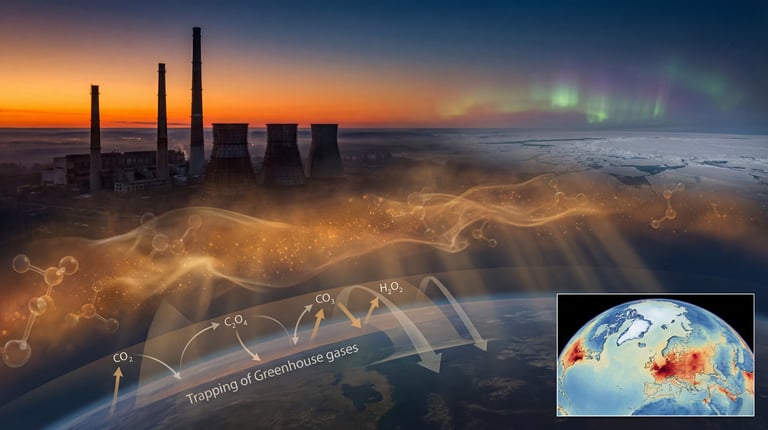
Carbon dioxide in the atmosphere won’t disappear overnight. Current levels caused by industrial activity may take tens of thousands of years to return to pre-industrial levels and climate effects would persist long after humans are gone.
Long-Term Legacy — What Would Still Prove We Existed?
Even millions of years after humans are gone, traces of our era would remain:
A thin geological layer enriched with synthetic chemicals and plastics.
Radioactive isotopes deposited from nuclear materials.
Fossilized urban sediments and deep foundations.
But surface structures - cities, roads, buildings - would mostly vanish over geological time.
Nature Always Finds a Way
In the end, Earth’s history shows that life adapts and evolves through even dramatic planetary changes. Without humans, the planet wouldn’t “end” - it would simply continue its natural trajectory, shaped by ecosystems, climate cycles and evolution.
From silent, overgrown cities to thriving wild landscapes, Earth’s future without us would be a blend of quiet recovery, dramatic transformation and ecological renewal.


Click Here